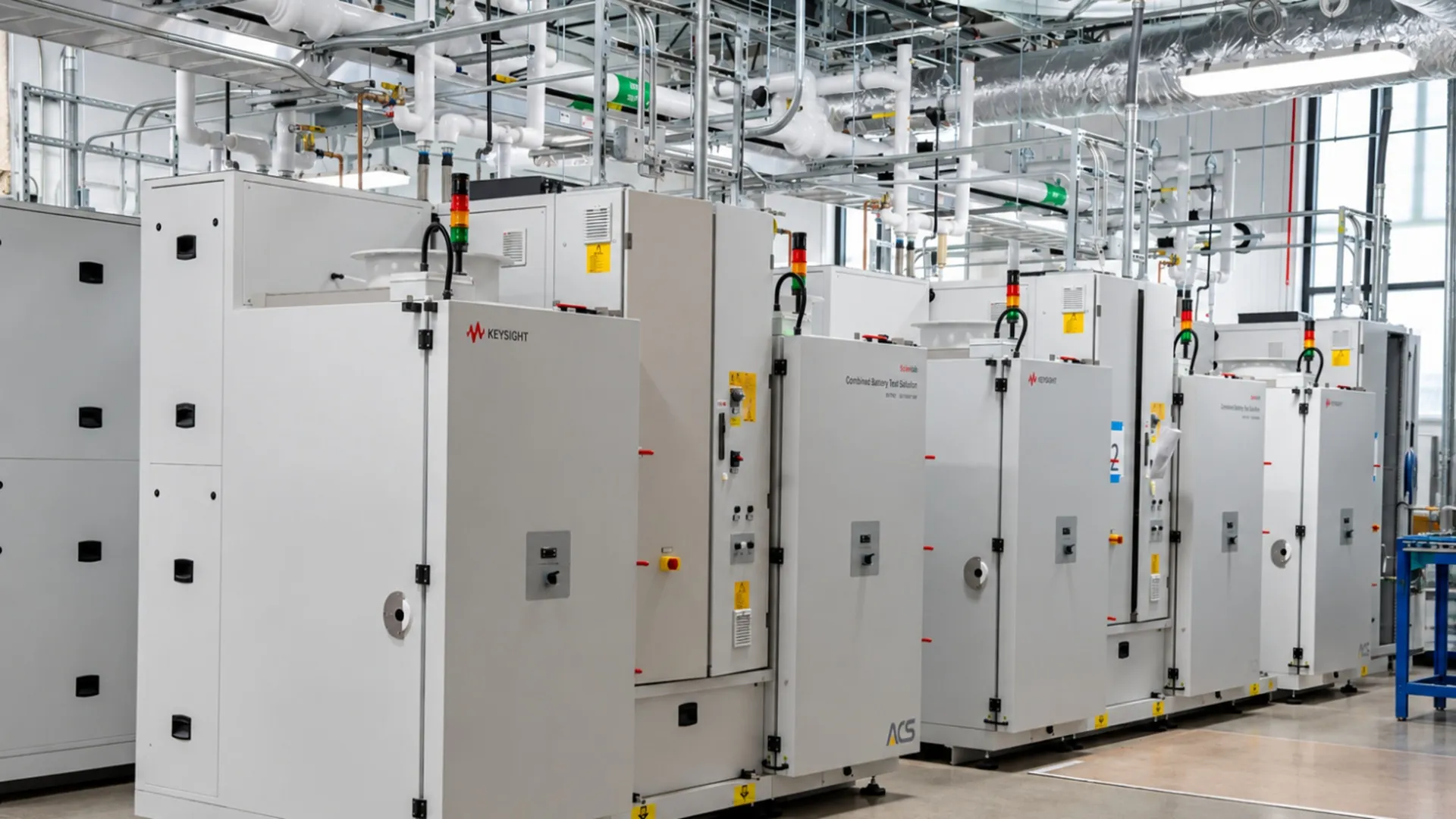
Toyota has opened a nearly $50 million battery research center in Michigan that will test and develop batteries for electric, hybrid, plug-in hybrid and hydrogen-powered vehicles.
The 30,000-square-foot Toyota Battery Center of North America in Saline will serve as the automaker’s central North American center for battery development and evaluation. The facility will function across the entire battery life cycle, from raw materials to vehicle applications and recycling.
Toyota first announced the investment in 2023, when it said the lab would strengthen its ability to evaluate batteries for vehicles built and sold in North America. The company said at the time that the facility would test the performance, quality and durability of the batteries under regionally specific requirements.
The center will also support Toyota’s North American manufacturing network. It will evaluate batteries for Toyota Battery Manufacturing North Carolina and work with vehicle manufacturers across the continent.
Battery tests are getting closer
Toyota said engineers and technicians at the Michigan plant will evaluate battery performance while developing technologies for different types of electric vehicles. Unlike a pure electric vehicle battery lab, the center will support the company’s broader strategy, which includes hybrids, plug-in hybrids, hydrogen vehicles and fully electric models.
Expanding battery testing to North America could also shorten the distance between vehicle production, field data and engineering teams. Toyota said the facility will allow engineers to identify and fix battery problems closer to where the vehicles are manufactured and used.
“For Toyota customers, this facility means Toyota engineers can identify and resolve problems on-site faster and closer to the source,” said Jordan Choby, group vice president of Powertrain. “It also means we can develop longer-lasting batteries that can withstand the conditions American drivers face every day.”
The facility builds on Toyota’s growing battery operations in the United States. When Toyota announced the Michigan project in 2023, it said the lab would support locally produced battery components and materials and give engineers space to research battery configurations for future vehicles.
The research goes beyond Toyota
The new center will also have an academic research function. Toyota plans to provide research access through the University of Michigan Electric Vehicle Center so other research partners can take advantage of its battery testing and evaluation capabilities.
Toyota is a founding member of the university’s Electric Vehicle Center. The company said the collaboration is also intended to help train battery engineers and technicians in Michigan.
The opening comes more than three years after Toyota announced plans to invest nearly $50 million in the facility at its research and development operations in Michigan. At the time, the automaker said expanding local battery evaluation capabilities would help increase electric vehicle production in North America.
The center now provides Toyota with its own U.S. facility to study batteries over a longer period of their development cycle, rather than just focusing on finished batteries or vehicles.
Toyota has not announced any specific new battery chemistry, range improvement or performance breakthrough. Instead, the facility will provide the testing and development infrastructure that the automaker says it will use to improve battery life, evaluate new technologies and support its expanding electric vehicle operations in North America.