More than half a dozen public and private sector organizations are collaborating to develop biological datasets for artificial intelligence models.
The consortium, which announced the collaboration today, is committing $1.8 billion to the project.
To study how a cell responds to a new therapy, scientists typically need to set up a physical test environment. This can take years of work and millions of dollars. A faster and more cost-effective approach would be to test therapies using simulated cells. A simulation does not require expensive laboratory equipment and can theoretically be carried out in a few hours.
Highly detailed, high-reliability simulations that can replace laboratory equipment are not yet available. This is because creating such virtual cells would require a new generation of biologically optimized AI models. Training such models would only be possible with larger biological data sets than currently available to scientists.
The research initiative announced today aims to create the necessary data sets. The project’s largest contributor is the U.S. Department of Energy, which will provide more than $500 million over five years.
Part of the funding is earmarked for microscopy equipment. The hardware is used to collect cell measurements for AI training datasets.
The Energy Department will prioritize three imaging methods: neutron scattering, X-ray and cryo-electron microscopy. The first two methods identify the materials that make up a biological sample. Neutron scattering devices detect light elements and their elements Isotopeswhile X-ray machines detect heavier elements. Cryo-electron microscopy, the third imaging method on the list, images the internal structure of cells.
The project’s second largest contributor is Biohub, a nonprofit research organization backed by Mark Zuckerberg. It provides $400 million for the initiative. Three quarters of the funds will go to internal research efforts, the rest will go to external projects.
Like the Department of Energy, Biohub will use cryo-electron microscopy to collect cell data. The nonprofit plans to use a special variant of the technology called cryo-ET. A biological sample is frozen and exposed to an electron beam. When the electrons come into contact with the sample, they change their path, providing insight into its internal structure.
Biohub’s work will also extend to other areas. The plan is to collect data not only about the inner workings of cells, but also about how different cells interact with each other. According to the group, the plan is to create images containing millions to billions of cells.
The US National Institutes of Health (NIH) is also participating. It will provide access to biological datasets developed “through previous federal investments of more than $500 million related to this initiative.” Biohub and NIH will work together to organize the data in a form that can be more easily processed by AI models.
Google DeepMind, Isomorphic Labs, a subsidiary of Alphabet Inc., and Meta Platforms Inc. are contributing a combined $300 million. Nvidia Corp. Meanwhile, plans to support aspects of the project that use accelerators and specialized software to carry out research workloads. The tech giants are joined by a half-dozen nonprofit research groups, including the Allen Institute.
“An accurate predictive model of biology could dramatically accelerate scientific discoveries by allowing scientists to conduct experiments digitally,” said Alex Rives, Biohub’s head of science. “The knowledge gained from this could enable a much better understanding of diseases and open up completely new avenues for healing.”
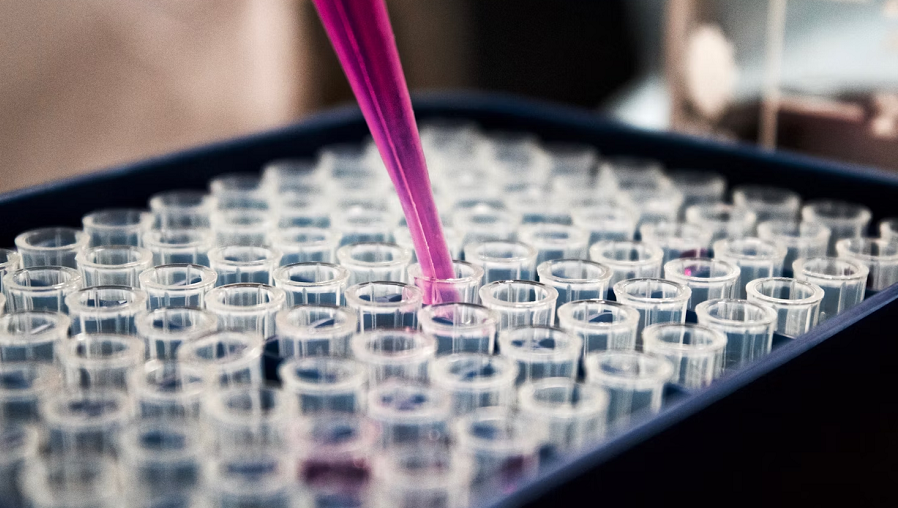
Photo: Unsplash
Support our mission to keep content open and free by interacting with theCUBE community. Join theCUBE Alumni Trust Networkwhere technology leaders connect, share information and create opportunities.
- Over 15 million viewers of theCUBE videosto spark conversations about AI, cloud, cybersecurity and more
- Over 11.4k theCUBE alumni — Connect with more than 11,400 technology and business leaders shaping the future through a unique, trusted network
Founded by tech visionaries John Furrier and Dave Vellante, SiliconANGLE Media has built a dynamic ecosystem of industry-leading digital media brands, reaching over 15 million elite tech professionals. Our new proprietary theCUBE AI Video Cloud is a game-changer in audience engagement, leveraging the theCUBEai.com neural network to help technology companies make data-driven decisions and stay at the forefront of the industry conversation.