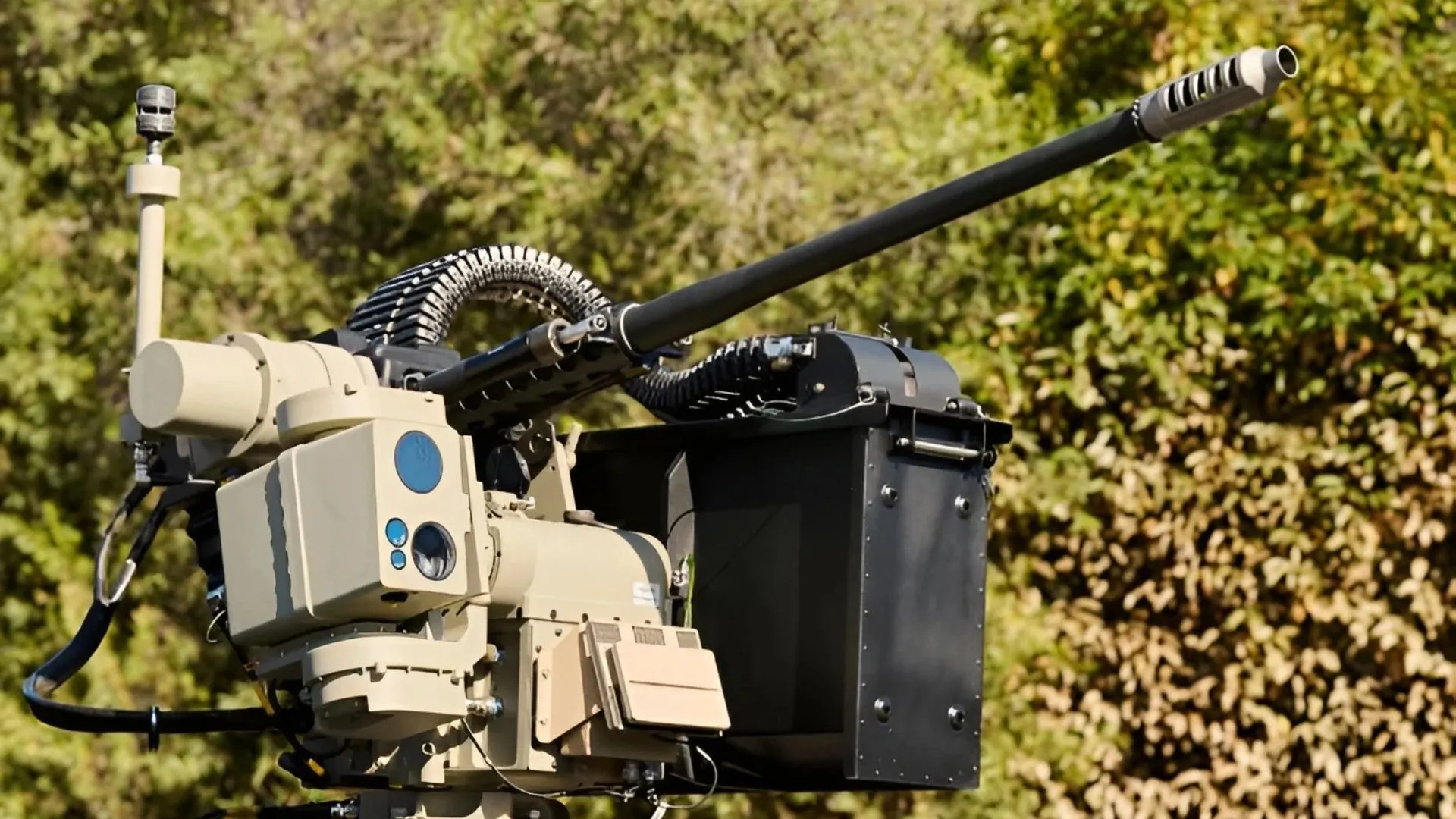
EOS Defense Systems USA is developing a new Slinger defense drone system with improved sensors and selectable autonomy. The system combines a 30 mm cannon, a targeting radar and advanced stabilization in one weapon station.
The next generation Slinger is nearing the end of development. EOS plans to begin US production in Huntsville, Alabama in 2027.
The upgrade targets a growing technical challenge for air defense. Small drones can maneuver quickly, forcing the operator to make deployment decisions within seconds.
Smarter sensor package
Slinger uses an Echodyne 4D targeting radar to detect and track moving threats. The radar features a compact design that keeps its size, weight and power requirements low.
A four-axis sighting system adds another level of precision. Its sensor unit can move in altitude and azimuth independently of the cannon.
Separating the sensor from the weapon also gives the system greater flexibility during a mission. The sight can continue to track a target while the weapon prepares to attack.
Slinger weighs less than 882 pounds and carries a Bushmaster M230LF 30mm cannon. It uses 30×113 mm caliber ammunition to combat drones and ground targets.
The system can fire a high-explosive 30mm proximity detection fragmentation grenade. The missile can attack a drone without requiring a direct hit.
This ammunition is particularly relevant against small air targets. A proximity effect can increase the likelihood that a drone will be damaged near its intended target point.
Autonomy shortens reaction time
Selectable autonomy is one of the most important changes in the new Slinger. Operators can decide what portion of the intervention process the system handles automatically. This feature becomes useful when multiple threats appear in quick succession. Software can help manage the intervention process while allowing operators to maintain control of the system.
The approach also gives military units more flexibility across different types of missions. Operators can adjust the system’s behavior depending on the threat and operational situation.
Slinger also retains his ability to attack targets while moving. Its stabilization system keeps the weapon aligned despite vehicle movement. According to EOS, the system can track and combat moving drones beyond 800 meters. It can also work independently or operate as part of a larger network.
Networking adds another layer to the system’s role on the battlefield. Slinger can potentially receive or share targeting information with other connected assets.
Designed for mobile defense systems
EOS plans to manufacture the improved Slinger at its Huntsville factory starting in 2027. The company expects U.S. production to shorten delivery routes and shorten lead times.
The production expansion comes as the military looks for more powerful defenses against low-cost drones. These systems can overwhelm conventional defenses through speed, numbers and changing flight paths.
EOS has been producing remotely controlled weapon systems since the 1990s. Its systems are used throughout North America, Europe, Australia, the Middle East and Southeast Asia.
According to EOS, more than 3,500 systems have been delivered worldwide. The company now expects the Huntsville facility to support the next stage of Slinger production.
Domestic manufacturing could also make it easier to support U.S. forces with replacement systems and components. EOS expects the shorter supply chain will help control costs for American and allied customers.
The company has not yet revealed the full specifications of the next-generation system. There are plans to release further technical and production details in the coming months.