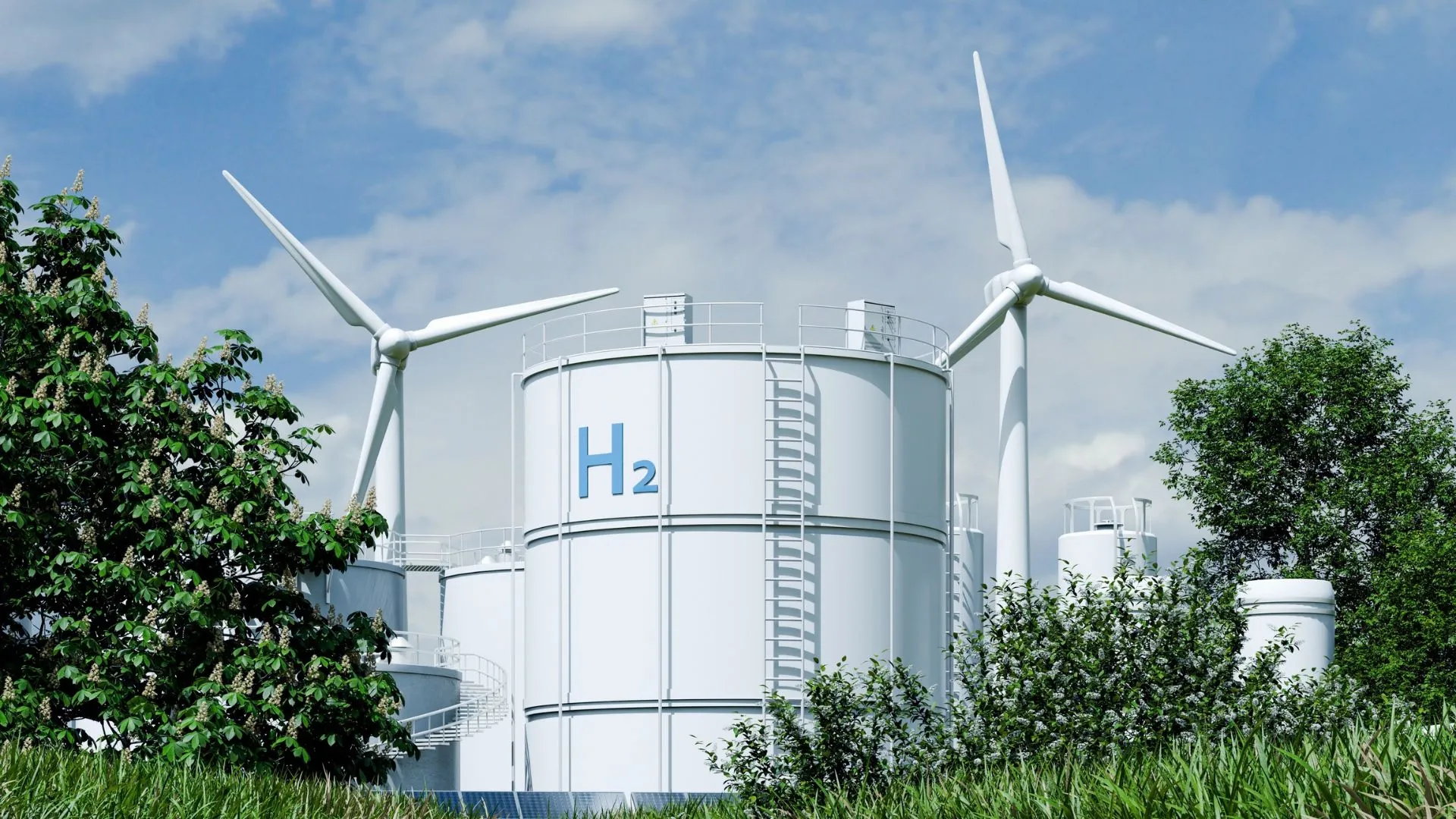
To transition the world to carbon-free energy, large amounts of hydrogen must be stored. A new study led by Shanghai Jiao Tong University has found that geological formations with naturally trapped hydrogen have been shown to provide a confinement for large-scale underground energy storage.
Take the Albanian chromite mine, for example. In this mine, a bubbling pool releases almost pure hydrogen gas into the air. Energy experts have previously dismissed these natural geological anomalies as dangerous and rare. Today, scientists believe these underground formations could provide a reliable solution to the biggest storage challenge of the energy transition.
“The results suggest that natural hydrogen storage facilities could be suitable candidates for underground hydrogen storage,” the researchers explained.
The underground vaults of nature
The expansion of hydrogen into an important energy source largely depends on securing viable, high-capacity storage sites. Typical underground options cannot meet these requirements.
Salt caverns represent severe geographic constraints, while aquifers and depleted hydrocarbon fields lack proven, long-term containment integrity for hydrogen gas. Therefore, these conventional options remain unviable for supporting a large-scale hydrogen economy.
The Bulqizë reservoir in Albania was formed along a massive fault zone. Located in an uplifted section of oceanic crust known as the ophiolite, the Bulqizë Reservoir generates its own continuous supply of clean energy.
Deep underground, groundwater comes into direct contact with iron-rich minerals like olivine, triggering a chemical reaction called serpentinization. This natural process splits water molecules and continuously produces pure hydrogen gas in the surrounding rock formations. It has safely contained hydrogen for thousands of years.
This geological track record led researchers Lei Hou, Zhengxin Zhang and Fengshou Zhang to test a bold idea: If nature has already built a leak-proof hydrogen vault, why not reuse it as a commercial storage facility?
Using advanced fluid flow and subsurface chemistry models, the research team analyzed 72 different operational scenarios to test the site’s limitations. The results were interesting.
Natural chemical reactions and dissolution would consume less than two percent of the stored hydrogen, proving that the underground vault stores gas with exceptional efficiency. Additionally, the models suggested the reservoir could hold between 350 and 480 million cubic meters of gas and support a daily throughput of 750,000 cubic meters.
Risk of error
Perhaps the most surprising discovery concerns the fault line itself. Pumping gas in and out of a seismic fault line sounds like a recipe for earthquakes, but cyclic testing over a 10-year period showed exactly the opposite effect. Normal gas pressure spreads across the rock formations, homogenizing subsurface forces and actually reducing the risk of the fault slipping over time.
“Over a period of 10 years, storing hydrogen in the reservoir would reduce the risk of fault slippage by redistributing gas pressure,” the team found.
Using naturally sealed fault zones could also reduce the capital investment typically required to contain hydrogen. Energy companies could realize significant capital savings by developing naturally occurring underground structures rather than excavating artificial caves or modifying depleted reservoirs.
The study is currently exclusively model-based. If investigated further, this study could open a promising new path to global, large-scale clean energy storage by showing that naturally occurring hydrogen traps can double as high-performance power banks.