The big picture: AI coding has sparked a new wave of decompiles and jailbreaks, mostly focused on video games. Modders cracked almost every firmware version of the PlayStation 5 a few weeks ago, and next up is the Nintendo Switch 2. The phenomenon could lead to a repeat of the original Switch’s piracy problem, but Nintendo has already responded.
The first public jailbreak of the Nintendo Switch 2 is now in circulation. If you haven’t bought the SmileBASIC 4 programming tool for the Switch yet, you’re unfortunately out of luck because it has already disappeared from the Nintendo eShop.
Researcher and modder Sammy Hajhamid has successfully cracked Switch 2 firmware version 23.0.1, running homebrew software, accessing most of the device’s peripherals, and backing up backup files. He demonstrated his progress with footage of a modified version of Mario Kart World starring Goku, Walter White, Peter Griffin, Hatsune Miku, Gold Ship and other famous non-Nintendo characters.
– Pepsipu (@pepsipu) October 22, 2026
While it’s usually Claude who drives the AI reverse engineering craze, Hajhamid instead used OpenAI’s Codex. He used it to add a vibe code to the Mario Kart mod, but the jailbreak itself took about two weeks.
The exploit works entirely through software, so no hardware modifications are required. However, since Hajhamid has not yet developed full custom firmware, the hack must be repeated every time the handheld console hybrid is rebooted and requires a computer.
Must read: Decompilation on steroids – Why AI is suddenly cracking old software
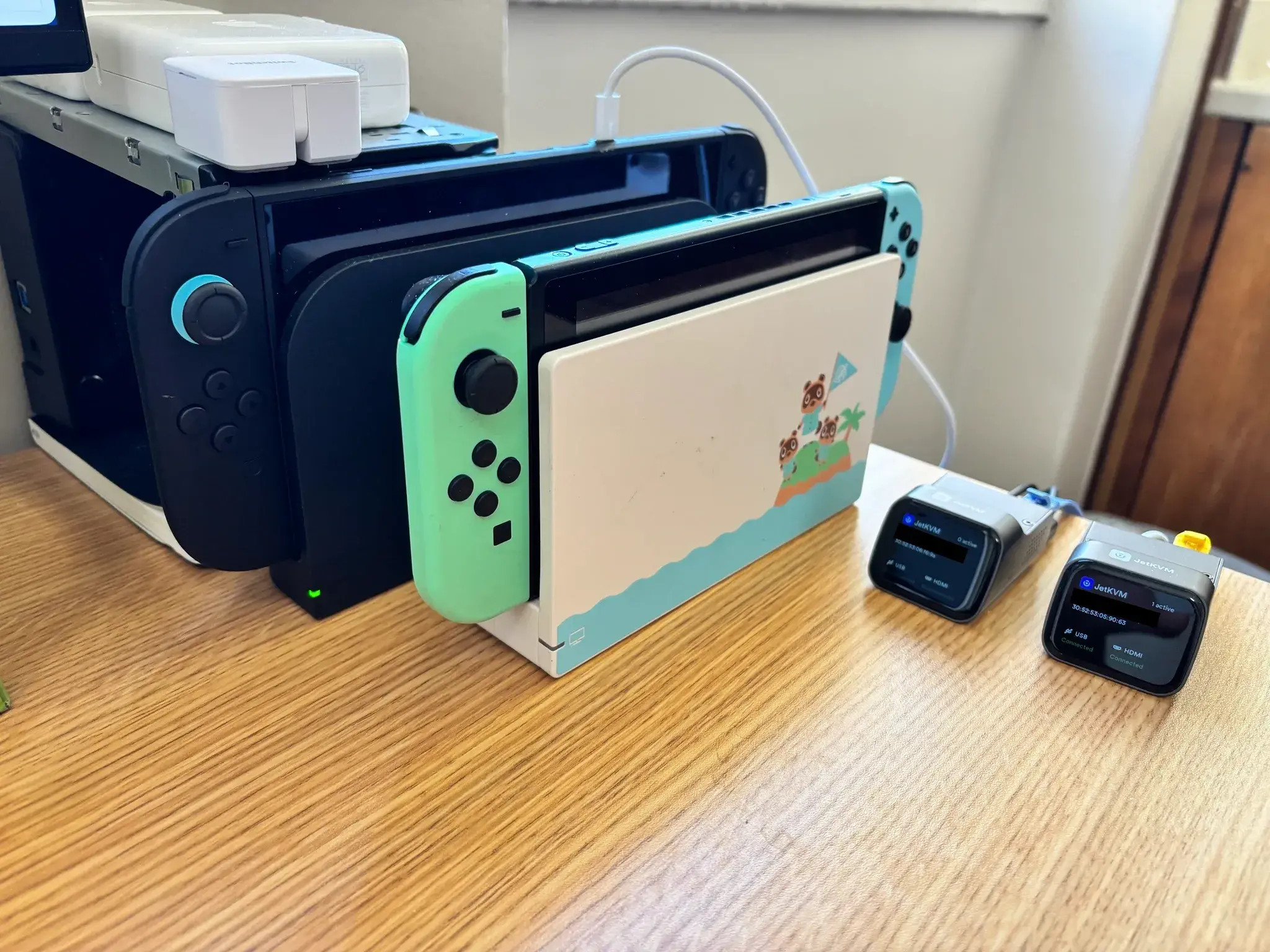
Getting Codex to hack the Switch 2 required two approaches and an elaborate connection to physically connect to the device. This included a method of providing USB inputs and receiving HDMI outputs, as well as a Bluetooth light switch flicker purchased from Amazon that could be used to press the power button when the AI coding tool crashed the handheld.
The first time Codex jailbroken the Switch 2 was via WebKit. This isn’t surprising, as while WebKit has already enabled console hacking, it hasn’t enabled homebrew, modding, or saving backups. To get there, the AI had to be given new goals.
The Switch 1 title SmileBASIC 4 ultimately turned out to be the access point. An earlier version already had a 3DS jailbreak enabled, so the choice was obvious. However, either Nintendo or developer SmileBomb delisted SmileBASIC 4 in the US and Europe shortly after the Switch 2 jailbreak was released, meaning only people who have already downloaded the coding tool can perform the hack. The Japanese version remained available at the time of writing.
As the Switch 2 hacking scene progresses, it could end up mirroring the original Switch, which was cracked unusually early for a Nintendo device.
Emulations and custom firmware typically impact Nintendo consoles long after their original shelf life, but major Switch releases often found their way to emulators almost immediately after hitting stores.
The PS5 scene hasn’t slowed down either. Earlier this month, a developer demonstrated what looks like a kernel-level exploit on firmware 14.10, the version Sony pushed to close the loophole that the Relapse jailbreak exploits. The exploit remains private and Sony has since released firmware 14.20. Hacks for previous firmware versions have added Linux support to the console.
