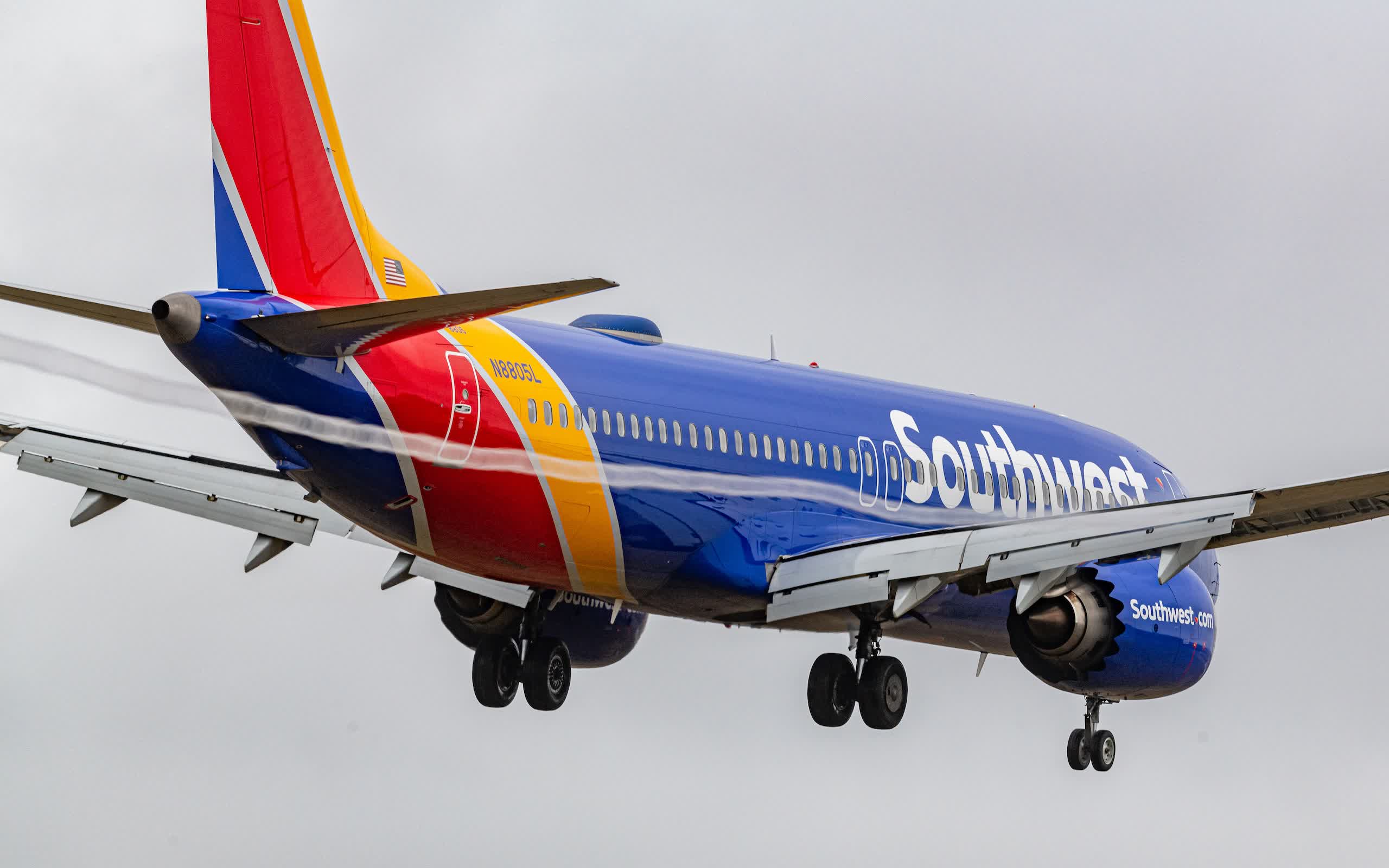
In short: Southwest Airlines and United Airlines have asked Boeing to deliver new 737 MAX jets with an earlier version of software after the manufacturer discovered a flaw in an automated navigation feature. According to the company, no aircraft from the two airlines fly with the affected software. However, both airlines have told Boeing that they do not want it installed on incoming aircraft.
The problem can occur when a flight crew aborts a landing and changes the plane’s planned route. Under certain circumstances, an automated navigation feature may not work as intended. Pilots could then have to forego some autopilot functions until they restore the system or continue using manual procedures.
This can increase the workload during a critical phase of flight. In the event of a missed approach, the crew usually has to leave the runway, follow a new route and control the aircraft at a relatively low altitude. Weather or other operational issues can also be factors.
Boeing informed 737 MAX operators of the problem in late August. The company said at the time that it did not view the issue as a security risk. A formal safety review has since been initiated and the results reported to the Federal Aviation Administration.
The FAA is investigating. A senior agency official said the regulator would act if necessary.
Boeing said it reminded operators of the procedures in place to help pilots safely handle such situations. The company added that its engineers are developing a software update that should permanently resolve the issue.
Boeing is also working with airlines on procedures that would allow pilots to reactivate the affected navigation function. The August notice said further guidance was expected by November and a software update was planned for early 2028. Boeing said it was trying to bring both dates forward.
GE Aerospace developed the software in question. The company said it is working with Boeing and will support the FAA’s review.
It is not yet known how many MAX aircraft have the software installed. Boeing said it is working to determine that number, but airlines are not required to inform the manufacturer when they update their cockpit software. Aviation data company Cirium lists 2,422 MAX 8 and MAX 9 aircraft in service worldwide.
Alaska Airlines, American Airlines, Southwest and United all operate MAX jets. These airlines stated that none of their active aircraft were using the software version in question. Boeing has told airlines they can revert to an earlier version.
The software issue could also impact Boeing’s plans for its latest MAX variants. The FAA last month approved the smaller MAX 7 for passenger service with newer software installed, according to a senior agency official. Boeing CEO Kelly Ortberg said he expects the MAX 10 to be approved soon.
The FAA’s findings could complicate that process. If the agency determines that the defect is an unsafe condition that requires correction, this could impact the MAX 10 certification.
Southwest has a particular interest in the outcome. The airline has been waiting for the MAX 7 for years and plans to fly it next year. Federal regulations generally require that newly built aircraft conform to the configuration approved at certification. It remains unclear whether new MAX 7s could ship with the earlier software requested by Southwest.
Delta Air Lines, United, American and Alaska have ordered MAX 10s.
Boeing said it first learned of the problem from a MAX operator in November 2024. The company initially concluded that the report did not meet its standards for a security review. After discussions with airlines and receiving additional feedback, the decision was reconsidered.
The matter comes as Boeing continues to scrutinize the MAX program. The plane crashed in 2018 and 2019, killing 346 people. These accidents involved the Maneuvering Characteristics Augmentation System (MCAS) repeatedly pushing the aircraft’s nose downwards. Boeing later changed the system and added safety precautions before returning the MAX to service.