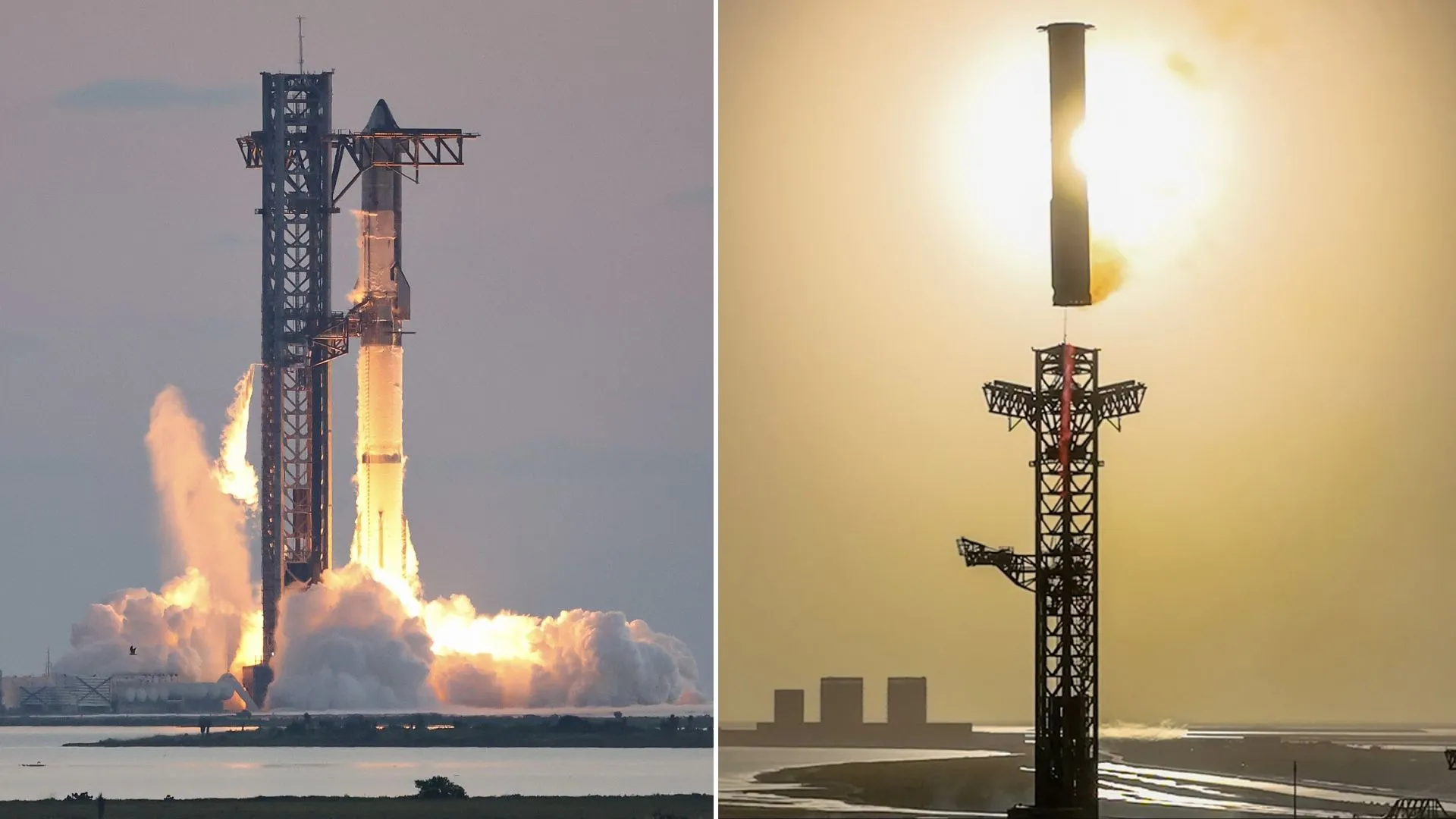
SpaceX is targeting the 15th integrated flight test of its Starship rocket in November 2026. The mission is expected to reach a key milestone: capturing the spacecraft’s upper stage on its launch tower after returning from space.
The company is also preparing to recover the Super Heavy booster and potentially return both stages of its massive launch system to the launch site.
As of October 28, SpaceX has not announced an official launch date. However, preparations are progressing at the Starbase in South Texas, where the company is testing the vehicles used for the mission.
The flight builds on September’s Flight 14, which reached orbit and deployed 26 next-generation Starlink V3 satellites.
When does Starship Flight 15 start?
SpaceX is currently targeting November, although the launch date depends on testing, vehicle readiness and regulatory approval.
On October 25, the company conducted a full-duration static fire test of Super Heavy Booster 22, firing all 33 Raptor engines for approximately 15 seconds. The test allows engineers to assess engine and vehicle systems while the booster remains attached to the ground.
According to Space.com, the booster will fly on Starship 42’s upper stage. The spacecraft has completed its own engine test and is undergoing final systems checks before launch.
Another factor is the launch approval from the Federal Aviation Administration. SpaceX President and Chief Operating Officer Gwynne Shotwell said during an earnings call in October that the company expects its Flight 15 license to cover return to launch site and tower catches for both phases, Ars Technica reported.
Try to catch both rocket stages
The main objective is to demonstrate the recovery of both components of the Starship launch system. After liftoff, Super Heavy provides the initial thrust needed to propel the spacecraft toward orbit before separating from the upper stage. SpaceX plans to steer the launch vehicle back to the Starbase, where mechanical arms called “chopsticks” mounted on the launch tower will attempt to capture it.
SpaceX has already demonstrated booster catches on previous flights. However, Flight 15 is expected to use the improved Booster 22 and attempt to recover both stages in the same mission.
The more ambitious goal is to capture Ship 42 after its orbital flight. For a controlled capture, the spacecraft must re-enter the atmosphere, withstand severe heating, and maneuver toward the launch tower. The spacecraft has performed controlled splashes of water in the ocean before, but a catch on the tower would be an important step toward making the entire system reusable.
Restoring both phases could ultimately reduce remediation needs and payload launch costs. However, a successful catch alone would not prove that Starship can be quickly inspected, renovated and flown again.
Preparation for lunar missions
Flight 15 also follows an important milestone from the previous mission. On September 28, Flight 14 reached orbit and deployed 26 Starlink V3 satellites, demonstrating Starship’s ability to carry operational payloads. However, a Raptor engine shut down prematurely during the climb, shortening the planned mission.
SpaceX has not officially confirmed Flight 15’s payload, but is discussing another Starlink deployment as a possibility. The program also impacts NASA’s Artemis lunar research campaign.
SpaceX is developing a modified Starship upper stage that will serve as a lunar lander. However, the vehicle must demonstrate additional capabilities before it can transport astronauts to the moon. This includes fuel transfer in space, which SpaceX plans to pursue in a future test.
The immediate priority for Flight 15 is to demonstrate that Starship can return both stages to the launch site. Success would advance SpaceX’s reusability ambitions and provide data for subsequent testing as the company works toward a more operational launch system.
