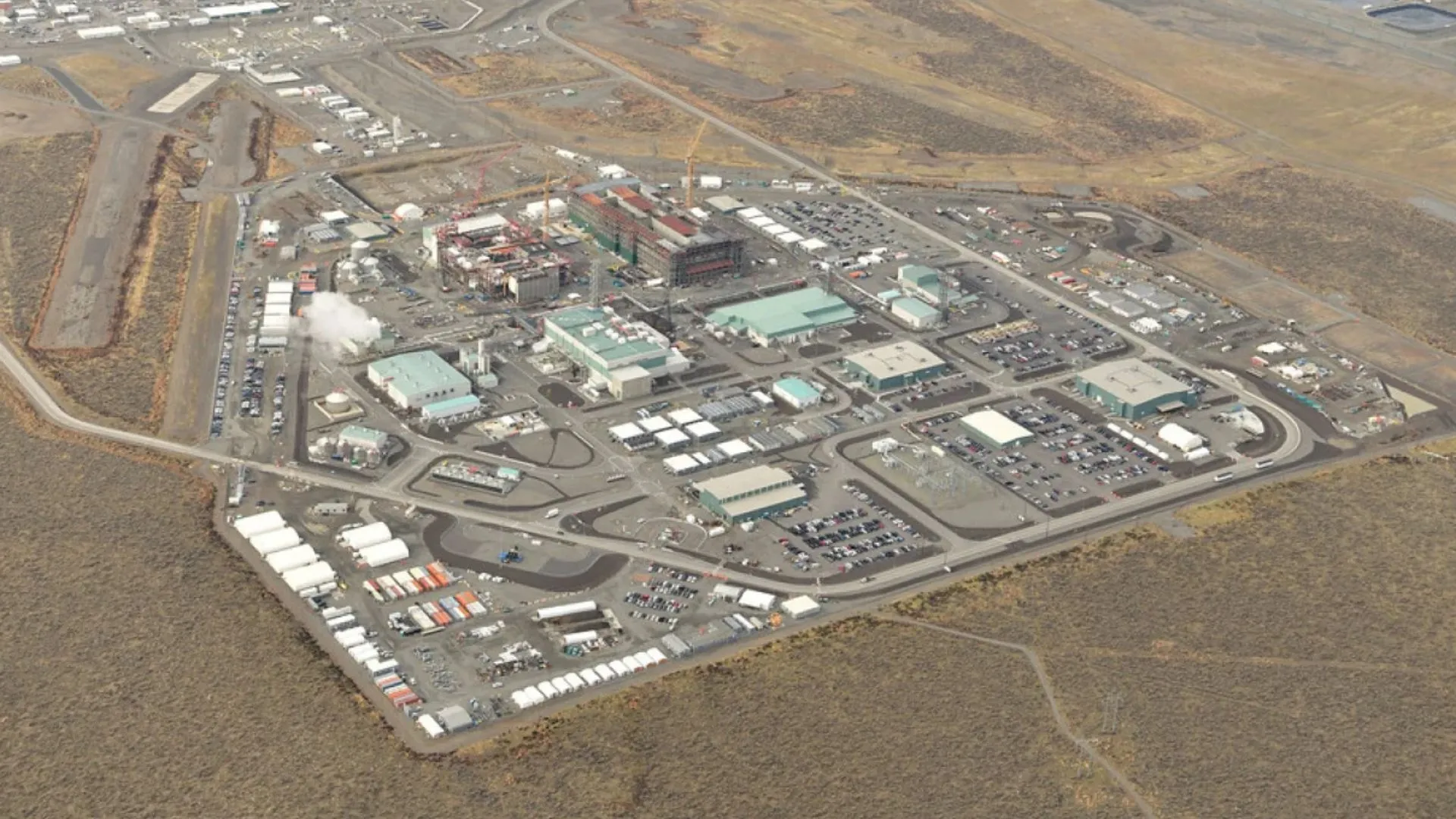
A vast nuclear reserve that once supplied America’s nuclear arsenal is preparing for an unprecedented industrial transformation.
Federal officials have initiated a formal bidding process to lease thousands of acres at the Hanford site to the private sector. The goal is to transform land originally cleared for wartime weapons production into a trading hub for clean energy, high-performance computing and advanced materials.
The Department of Energy’s Office of Environmental Management (DOE-EM) confirmed it is offering up to 3,700 acres under its American Energy Hubs program. The move marks a turning point in the economic revitalization of an area long characterized by complex environmental cleanup.
Strategic advantage for energy-intensive companies
Bidding begins with an initial 1,876-acre parcel called Tract 1. An adjacent 1,249-acre parcel called Tract 2 could also open depending on demand. Both parcels are located on the Columbia River, a major waterway in southeastern Washington state.
The designated area borders another large low-carbon energy project. Just north, a consortium consisting of Amazon, X-Energy and the regional energy supplier Energy Northwest is developing the Cascade Advanced Energy Facility. This project envisages the use of up to 12 gas-cooled, high-temperature small modular reactors (SMRs) of the Xe-100 type.
Locating new commercial infrastructure alongside next-generation nuclear facilities provides a strategic advantage for power-hungry operations, particularly data centers and heavy industrial manufacturing.
Modern data centers and modern factories consume enormous amounts of electricity. For this reason, regulators have introduced safeguards. Bidders must follow the “build, bring or buy” rule for all of their energy supply.
Tenants cannot simply rely on the existing regional network if this puts a strain on local supplies. Instead, developers must establish dedicated on-site or off-site power generation, import power from outside the region, or purchase guaranteed commercial reserves. They must also independently finance all utility connections and cover the entire life cycle costs from construction to decommissioning.
Revival of a dormant place
This measure is consistent with Washington’s Ratepayer Protection Pledge, an effort to stop energy-intensive commercial developers from driving up electricity bills for surrounding communities.
Between 1943 and 1989, Hanford produced about two-thirds of all plutonium used in U.S. nuclear warheads. Production ceased with the end of the Cold War, making way for one of the world’s most ambitious environmental cleanup projects under state and federal oversight.
Local officials say the cleanup has progressed far enough to safely bring commercial industry back. The latest land offering follows an agreement reached in February with technology company General Matter. Under that agreement, the company leased Hanford’s 190,000-square-foot fuel and materials testing facility – which had been vacant since 1993 – to develop advanced nuclear fuel processing technologies.
Proposals for the newly offered parcels will be evaluated for technical feasibility, financial support, environmental compliance and formal collaboration with local communities and Indian tribes.
“Exploring these opportunities is the next logical step for a site moving forward with cleanup efforts and for a community that has always championed the aforementioned American energy and innovation,” concluded Hanford Site Manager Ray Geimer.
