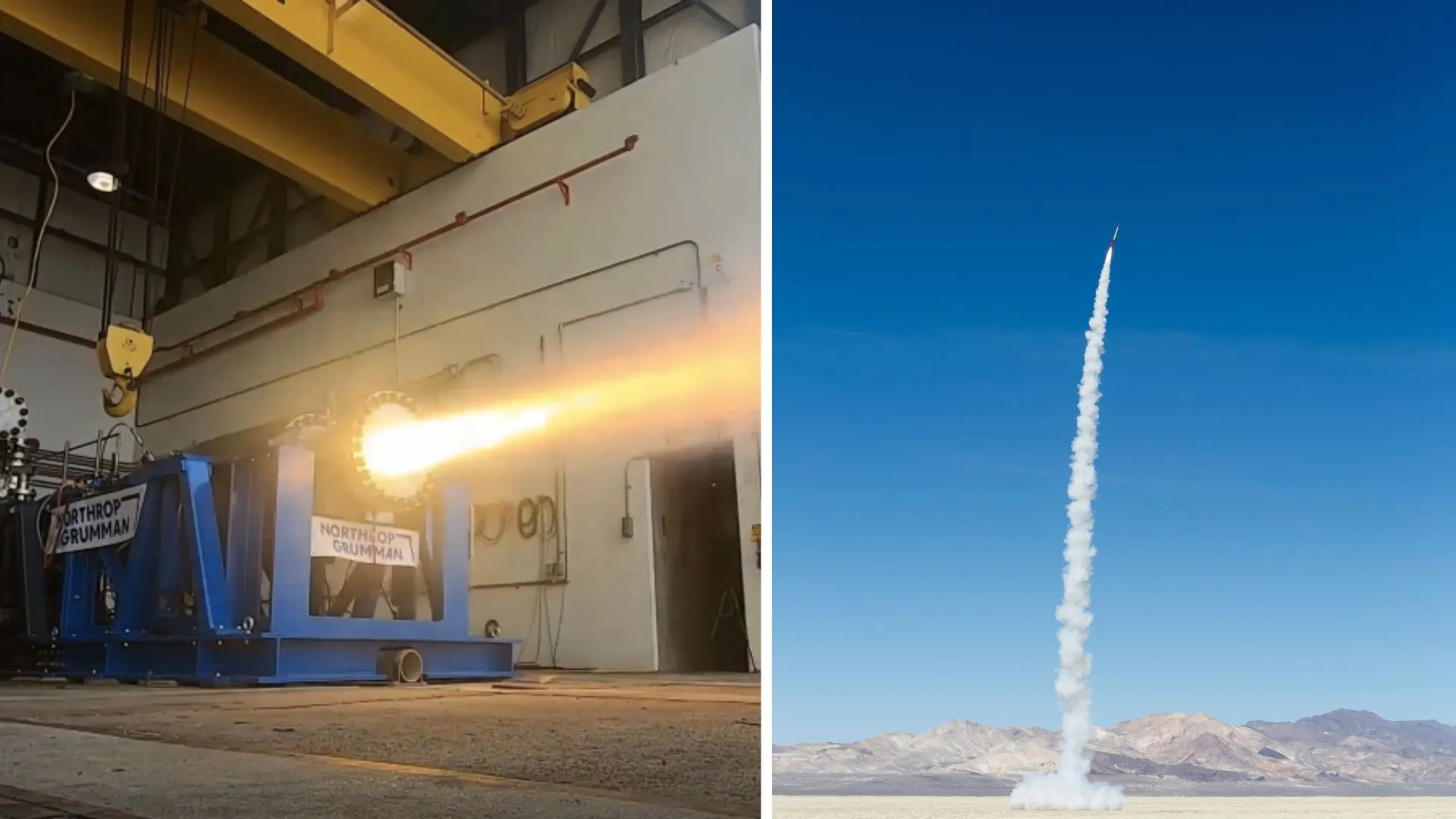
A Virginia-based company will develop next-generation air-breathing engines for the U.S. Army. With this, Northrop Grumman aims to meet the growing challenges of detecting and combating unmanned aerial systems at greater distances.
The company will develop and integrate solid-fuel ramjet propulsion technology for integration into XRC missile prototypes under this $18.8 million contract with the U.S. Army’s Combat Capabilities Development Command Aviation & Missile Center.
The development of unmanned aerial threats requires innovative solutions
“The rapid evolution of unmanned aerial threats requires innovative solutions,” said Erik Buice, vice president of missile products at Northrop Grumman.
“By aligning the Army’s vision for next-generation air defense with our advanced propulsion expertise, we deliver capabilities that attack more distant targets, protect mobile forces and strengthen layered defenses against emerging airborne threats.”
Unlike solid rocket engines, which use fuel containing propellant and a chemical oxidizer, solid fuel ramjet engines use atmospheric oxygen as an oxidizer for the fuel during flight, freeing up internal volume for additional fuel.
The result is a more efficient propulsion system that delivers greater range and power, enabling the engagement of highly maneuverable airborne threats at a safer distance from protected forces. The development includes a comprehensive ground and flight test campaign to validate the design and production processes. The resulting design will support scalable, cost-effective manufacturing to quickly meet urgent defense needs.
The XRC program focuses on improving the performance of the Army’s Maneuver Short-Range Air Defense System (M-SHORAD), which is designed to protect maneuver forces from low-altitude aerial threats. The system’s compatibility with the Stinger Vehicle Universal Launcher also improves defense against advanced unmanned aerial systems as well as traditional fixed-wing and rotary-wing aircraft, according to a press release.
Flight test campaign to validate design and production processes
The development includes a comprehensive ground and flight test campaign to validate the design and production processes. The resulting design will support scalable, cost-effective manufacturing to quickly meet urgent defense needs.
As adversaries increasingly deploy sophisticated unmanned systems, the XRC program’s extended range capabilities are a critical element of the Army’s layered air defense strategy. Northrop Grumman’s comprehensive commitment to the Army’s broader defense UAS ecosystem also includes providing the foundational command and control network, kinetic options and propulsion expertise utilized by advanced interceptor systems, the release said.
The company also announced that it is further developing Raid Hunter, the 50mm cannon-based air defense system that provides a low-cost, high-attack capacity solution designed to deter mass air attacks and mixed air attacks and improve the protection of maneuver forces and critical infrastructure within a layered CUAS defense framework.
Raid Hunter combines proven Chain Gun® technology, precision-guided 50mm munitions and a networked, interoperable systems controller to provide powerful protection against high-volume, mixed-threat air attacks. It is designed to defeat a range of airborne threats, including high-priority cruise missile threats, unmanned aerial systems (UAS) and other advanced threats.