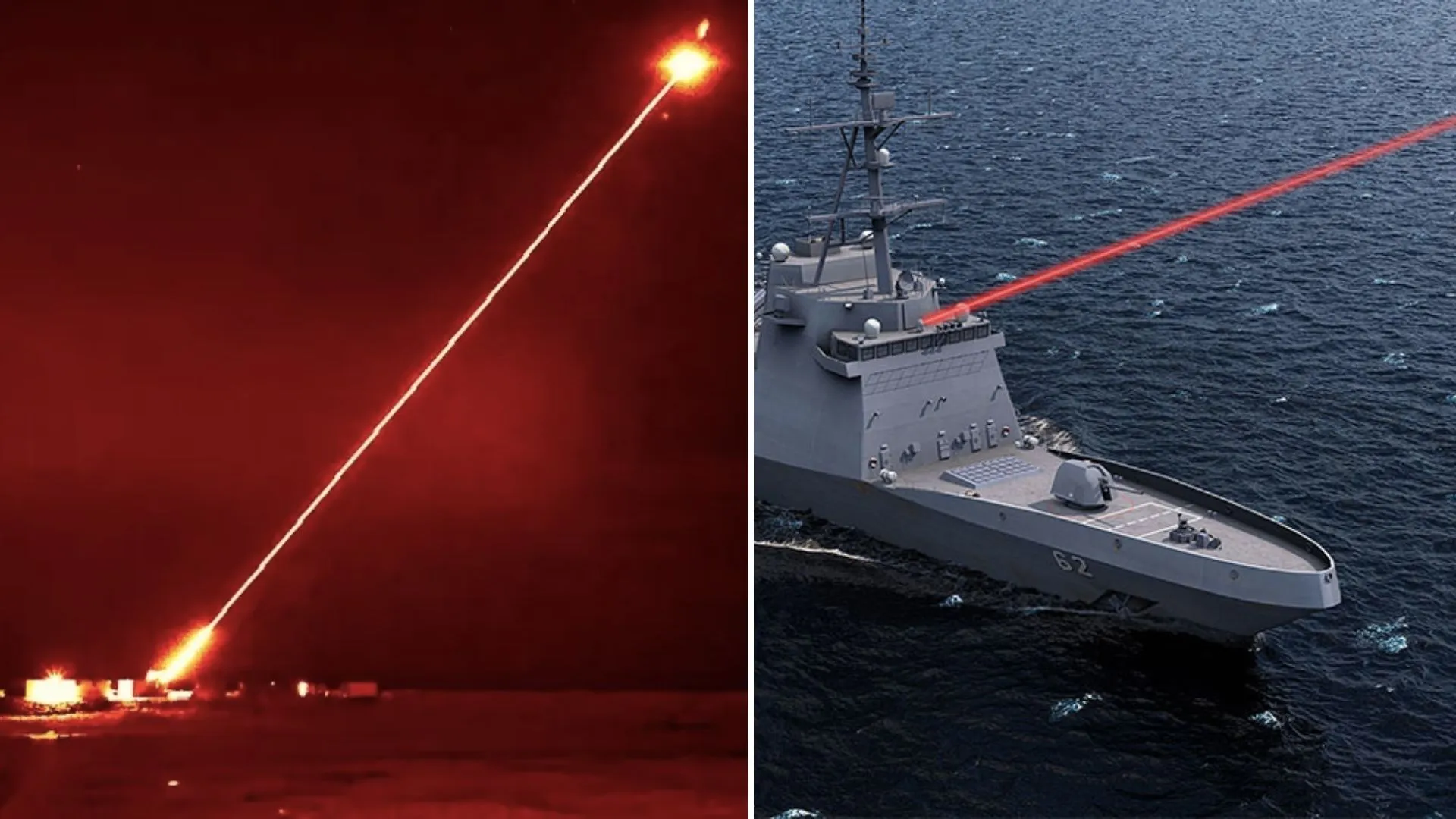
The US military now believes that directed energy weapons will no longer be used experimentally, but will instead be used regularly on the battlefield in the Strait of Hormuz. Laser systems are used against drones and other aerial threats, and the U.S. Army has also committed nearly half a billion dollars to bring a new generation of high-energy laser weapons into production.
The development marks a major shift in the way modern militaries might defend themselves against the growing threat posed by low-cost drones.
Operators use modified Xbox-style controllers to control laser systems
Some operators use modified Xbox-style controllers to control the laser systems. The concept is less futuristic than it sounds: Modern gaming controllers are already designed for precise movements, fast inputs and aiming, while many military personnel are familiar with their basic structure.
The idea is essentially to use an interface that already works well, rather than designing an entirely new control system.
The comparison to video games has inevitably attracted attention, but there’s a practical consideration behind the novelty: sophisticated weapons still require intuitive human-machine interfaces.
A high-energy laser works very differently than a traditional rocket
A high-energy laser works very differently than a traditional weapon or missile. The system generates electrical energy and converts it into a highly concentrated beam. Sensors first detect and track the target. The laser is then aimed at a selected point and held at that location for a period of time called the “dwell time.”
Instead of hitting the target with an explosive warhead, the laser transfers energy into the target’s surface. Depending on the system and target, the heat can damage sensors, electronics, structural components, or other critical parts.
This makes the technology particularly interesting for anti-drone missions, where disabling an aircraft’s sensors or critical components can be enough to bring it down.
Advances in electrical power systems, tracking technology, beam control and compact high-energy lasers are making the concept increasingly practical.
The United States is now demonstrating the technology in operational environments while also securing large contracts for production systems.
This does not mean that the era of missile warfare is coming to an end. Instead, the battlefield could enter a phase in which missiles, guns, electronic warfare and directed energy weapons work together.
The most important change may therefore be less dramatic than the image of a laser beam shooting down a drone.
It is the emergence of a new calculation in air defense: if electricity can replace a missile in some missions, the cost, speed and sustainability of defense against large numbers of drones may change significantly.
“It’s weapons-grade light that spends several seconds of what we call ‘dwell time’ on the target to knock it down,” said Jared Keller, who edits the Laser Wars newsletter.
“It now makes sense to actually take them out of a lab and into real environments. The most important thing.” [development] Is the Army awarding a half-billion-dollar contract to build war-grade lasers? [which] “Concentrate photons on a target to produce catastrophic, destructive effects,” he added, according to the NY Post.