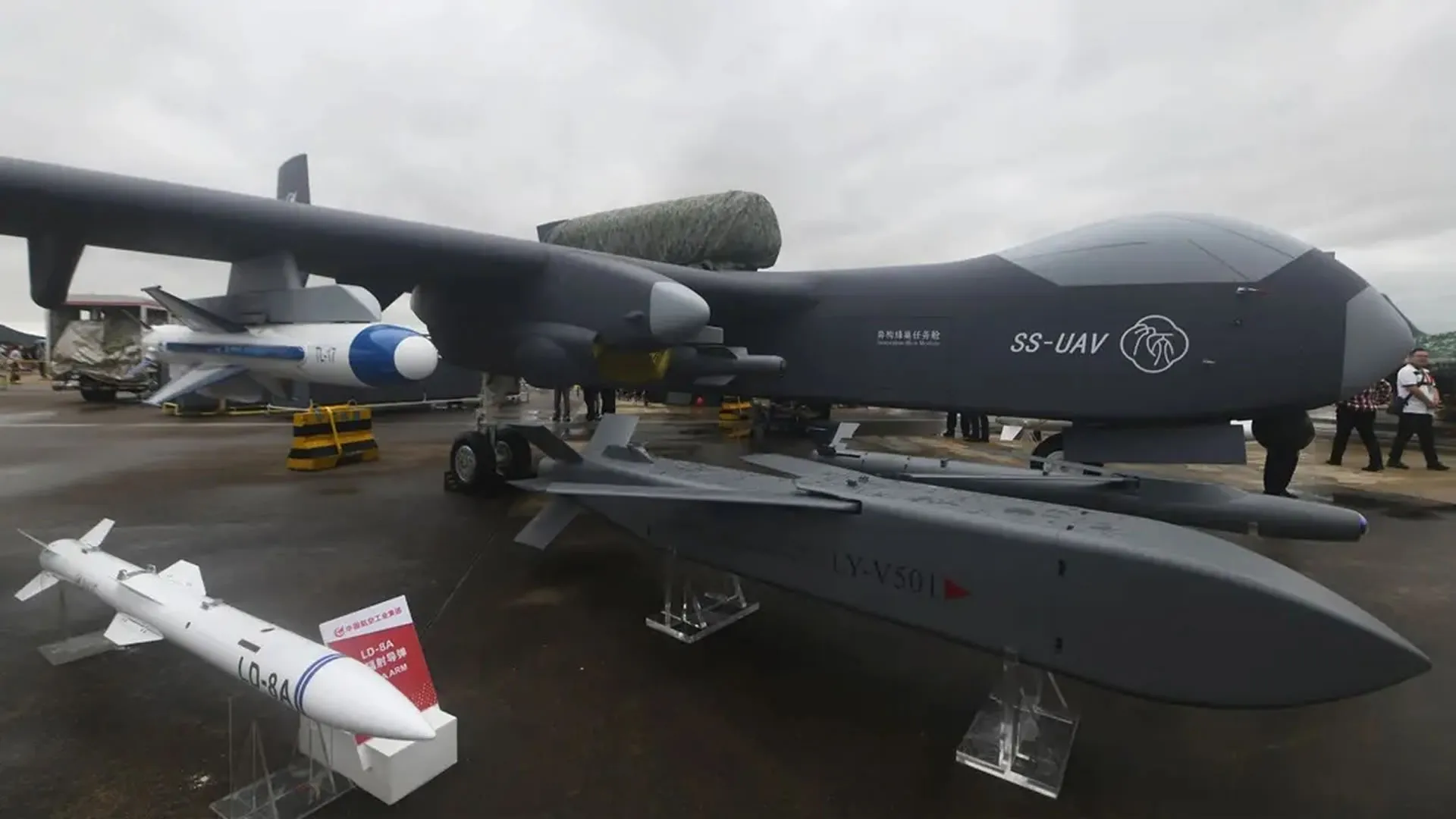
On Wednesday, September 30, 2026, the Chinese People’s Liberation Army (PLA) inaugurated several new training facilities to “future-proof” its armed forces. This includes schools and colleges that produce technical personnel and civil servants who can better understand and use technologies such as drones and artificial intelligence (AI).
This is reportedly part of Beijing’s “centenary goals” as part of the PLA’s 100th birthday in 2027. The hope then is to fully modernize the PLA by 2035 and make it a “world-class” force by mid-century.
These schools are not about creating a new “AI army,” but rather a way to institutionalize capabilities in the PLA that Beijing believes will be important in future warfare. Probably the most important of these is the so-called College of Unmanned and Intelligent Engineering.
This dedicated training school will teach personnel about drones, autonomous systems, robotics, AI-assisted decision-making, sensors and communications. It will also likely include training in the engineering required to integrate all of these units into military units.
This school does not represent a new direction in the People’s Liberation Army’s rationale. China’s defense policy has been talking about a more “informationized” and increasingly “intelligent” direction for years.
Teaching old dogs new tricks
However, this move makes it more formal as President Xi calls for greater military use of unmanned intelligent technologies and networked information systems. What is significant, however, is the fact that this has now become a formal university within the PLA’s Army Engineering University.
This suggests that the PLA now views drones and AI as serious things rather than a niche military specialty. In other words, they are evolving into something that constantly needs trained engineers and officers.
Other training facilities announced include two new NCO schools. Such officers, in case you don’t know, are usually experienced professional soldiers with a status somewhere between enlisted officers and officers.
For Western armies, they are extremely important tasks, especially in technical areas where complex equipment must be operated and maintained. They are also an important link in translating the orders of higher officers into actual physical actions.
These new NCO schools encompass two related but distinctly different roles. The first, the College of Combat Support, trains individuals trained in the operation and support of combat systems, communications, engineering, electronic warfare, reconnaissance, etc.
The second, called the College of Equipment Support, will train technicians responsible for keeping increasingly sophisticated weapons, vehicles, drones and electronics operational.
Future-proof PLA for drones and AI
Taken together, this means that the People’s Liberation Army wants to move forward as a combat force with drones, sensors and networked weapons operated by experienced and knowledgeable personnel.
The announcement of a fourth school is also noteworthy. This is the so-called College of Discipline Inspection, Law and Politics on the Xian campus of the National Defense University (NDU).
This appears to be an attempt to combat corruption within the PLA. Personnel trained here will essentially build careers in investigating misconduct, enforcing military regulations and supervising officers.
This supports Beijing’s gigantic efforts to combat corruption within its armed forces. Overall, these new colleges are a way for the PLA to change the type of officers and staff it produces to better prepare them to fight in a world dominated by drones and AI.