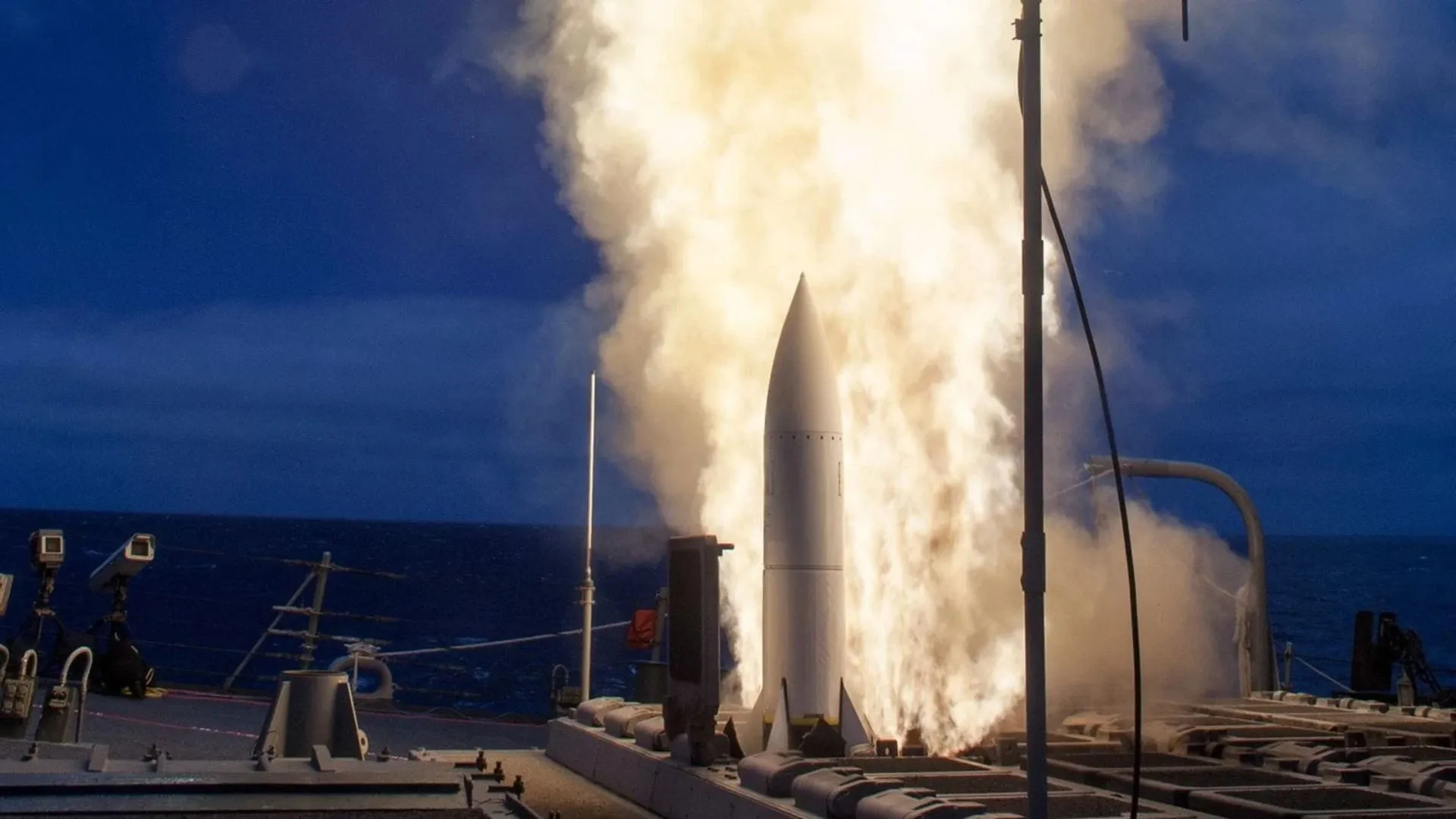
Raytheon has won a potential $24.4 billion U.S. contract to produce Standard Missile-6 interceptors over the next five years.
The agreement also includes two option years, giving the U.S. Navy a longer path to expanding its SM-6 inventory. The missile supports both defensive and offensive missions from ships and land-based launchers.
The size of the award indicates a continued need for interceptors capable of dealing with multiple threats. Raytheon, an RTX company, is now planning to increase production capacity to meet this demand.
Multi-role rocket
SM-6 combines multiple capabilities in one missile design. It can attack aircraft, surface targets and ballistic missiles.
The weapon is based on the Navy’s standard rocket family and was launched from multiple ship platforms. Land-based launchers have also fired the interceptor during testing and operations.
This flexibility gives naval forces another option when a platform faces different types of threats. An SM-6 can support air defense while retaining the ability to attack surface targets.
Raytheon describes SM-6 as its only combat-proven weapon that covers these three operational areas. The company has continued to expand production as demand increases across the U.S. defense enterprise.
The missile’s multi-mission design also influences the way the Navy can allocate its inventory. A single interceptor type can meet multiple mission requirements without requiring separate weapons for each threat category.
The focus is on production capacity
Meeting this demand requires more than securing additional orders. Raytheon has expanded its workforce and modernized manufacturing operations to increase production.
Automation is also playing a growing role in the production process. The company says it has invested in assets while strengthening relationships with suppliers across the defense industry.
These changes target restrictions that may limit missile production once funding becomes available. Increasing factory throughput can help Raytheon maintain a steadier flow of interceptors to meet Navy needs.
Raytheon President Phil Jasper said the company remains focused on increasing SM-6 availability. He pointed to investments in facilities and operations as part of that effort.
The five-year baseline period gives the Navy better visibility into future missile deliveries. Two additional option years, if exercised, could expand the production pipeline.
Expansion of the Navy’s missile inventory
SM-6 plays a key role in the Navy’s layered approach to air and missile defense. Its ability to perform diverse missions allows commanders to use the weapon against changing threats.
The rocket can also operate from different launch environments. This expands the number of platforms that can use the system in defensive or offensive operations.
For U.S. sailors, the contract is expected to result in a larger and more consistent delivery of a widely used interceptor. Raytheon now faces the manufacturing challenge of converting its billion-dollar commitment into sustainable production.
The award also places greater emphasis on the weapon’s industrial performance. More interceptors will require additional labor, suppliers and factory throughput across the defense manufacturing network.
This production effort will be important as the Navy manages air defense requirements and the ballistic missile threat. The SM-6 order gives Raytheon several years to scale its production base to meet these requirements.